World
The Island
A seed-shaped main landmass, region-specific coasts and a tropical offshore environment whose gameplay content is planned after the beta.
Development reference · reviewed 21 October 2026
Coast and offshore environment update: focused main-generated checks passed for both world sizes. Island style accepted; player travel and standalone performance remain separate. Implementation means the feature exists; focused tests cover specific scenarios. Neither establishes complete standalone acceptance.
See the current beta verification status →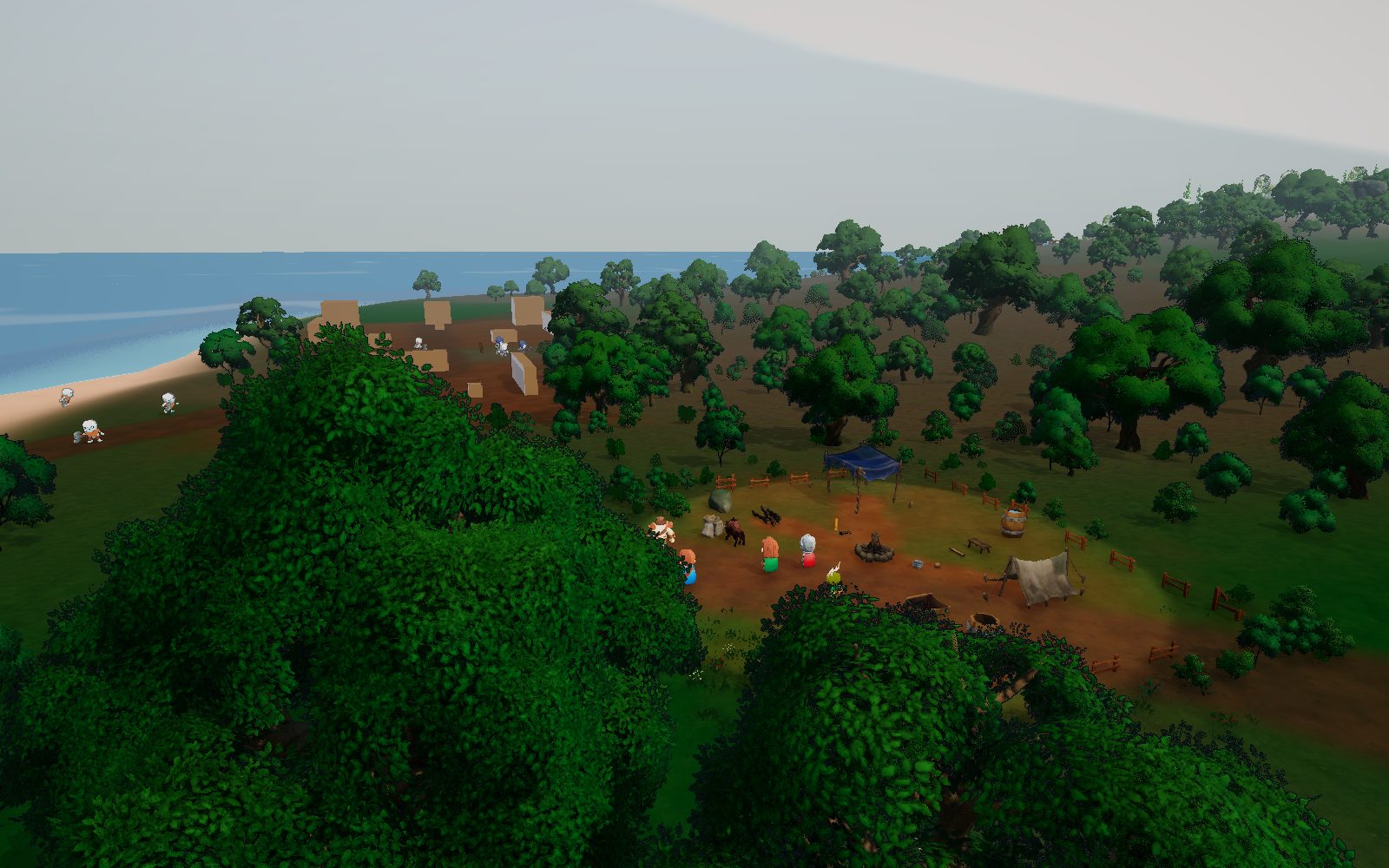
Each new world in Epos of Ashes is generated from a seed. For a fixed generator and content version, the same seed determines the same plan: the same coastline, the same rivers and roads, the same camps and caves. A different seed gives you a different island.
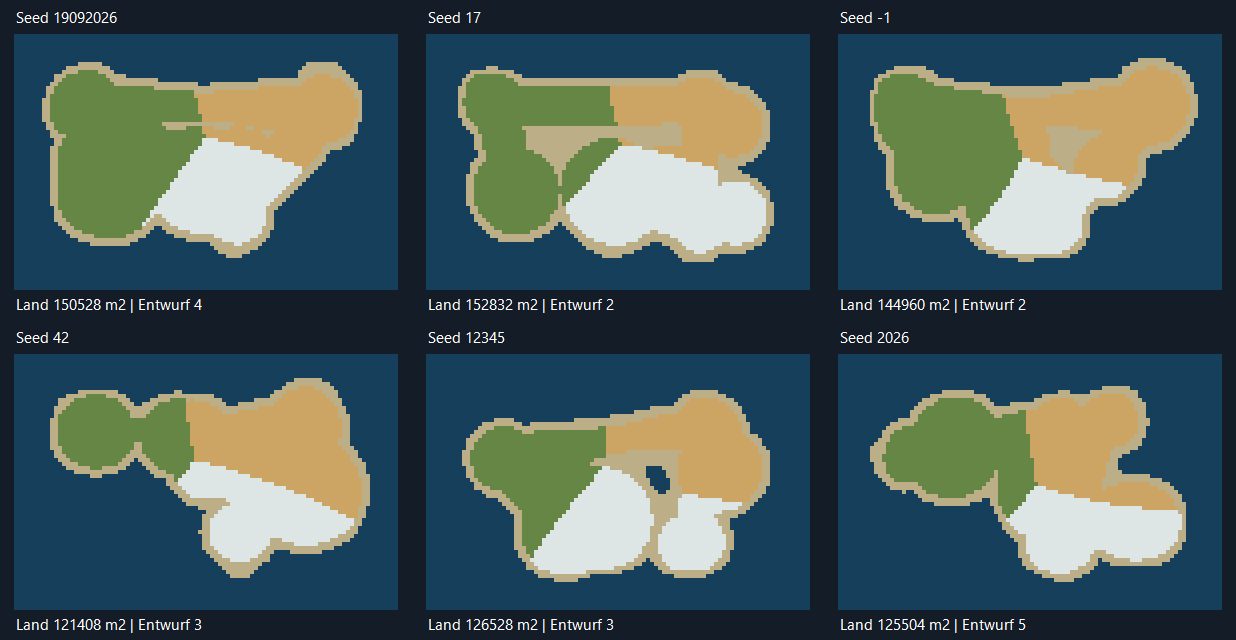
The main landmass
- A connected landmass surrounded by open sea, with beaches and cliffs.
- Three biomes and one Ash Scar — see Biomes.
- A road network connecting the forest camp, trader posts, settlements and ruins.
- Rivers with bridges and fords, ponds and desert oases.
- Caves — one for each biome — and ruins of the Old Ones.
Mainland beaches
The checked summer, winter and desert coasts retain their continuous 17-metre sand band, now with a lighter surface, embedded stones and small groups. Summer grasses, winter frost grasses and desert aloe follow the surrounding landscape. New mainland palms appear only in the desert.
A five-metre corridor remains clear of the new solid decoration; placement avoids reserved sites, roads, camps, water and unsuitable slopes. The pass leaves terrain height, coastline and main layout intact. Its decoration uses normal streaming and adds no new gathering or enemy mechanics. Older saved world recipes without the dry-beach details keep their original population.
Both standard and large-world main-generated runtime checks pass on the documented seed across these three biomes. That is technical integration, with no standalone FPS or complete player acceptance established. A volcanic coast is outside this evidence.
The tropical offshore island
A single tropical island environment is integrated into the main project. Its seed-dependent position uses open water and clearance from the mainland. Broad pale sand surrounds a low green interior, with separate rounded rock masses and denser palms, pandanus, shrubs and small plants inland. It is not an archipelago or a uniform slope up to one central mountain.
The visual style and denser planting have been accepted, and focused main-generated checks pass for standard and large-world profiles. Island work is paused; gameplay content is planned after the beta. No island quests, enemies, harvestable resources, boat access or travel mechanic is established by this integration. Test visits were diagnostic teleports, not a completed player route. Standalone frame rates and general player travel remain separate checks.
See An Island Beyond the Shore for current runtime images of the island and mainland beaches.
Danger steers, not permission
Nothing is fenced off. You can walk into the winter on your first day — you will probably just die there. The world tells you how dangerous a place is instead of forbidding it. Where a region is gated, the game explains why and what you need.
The map
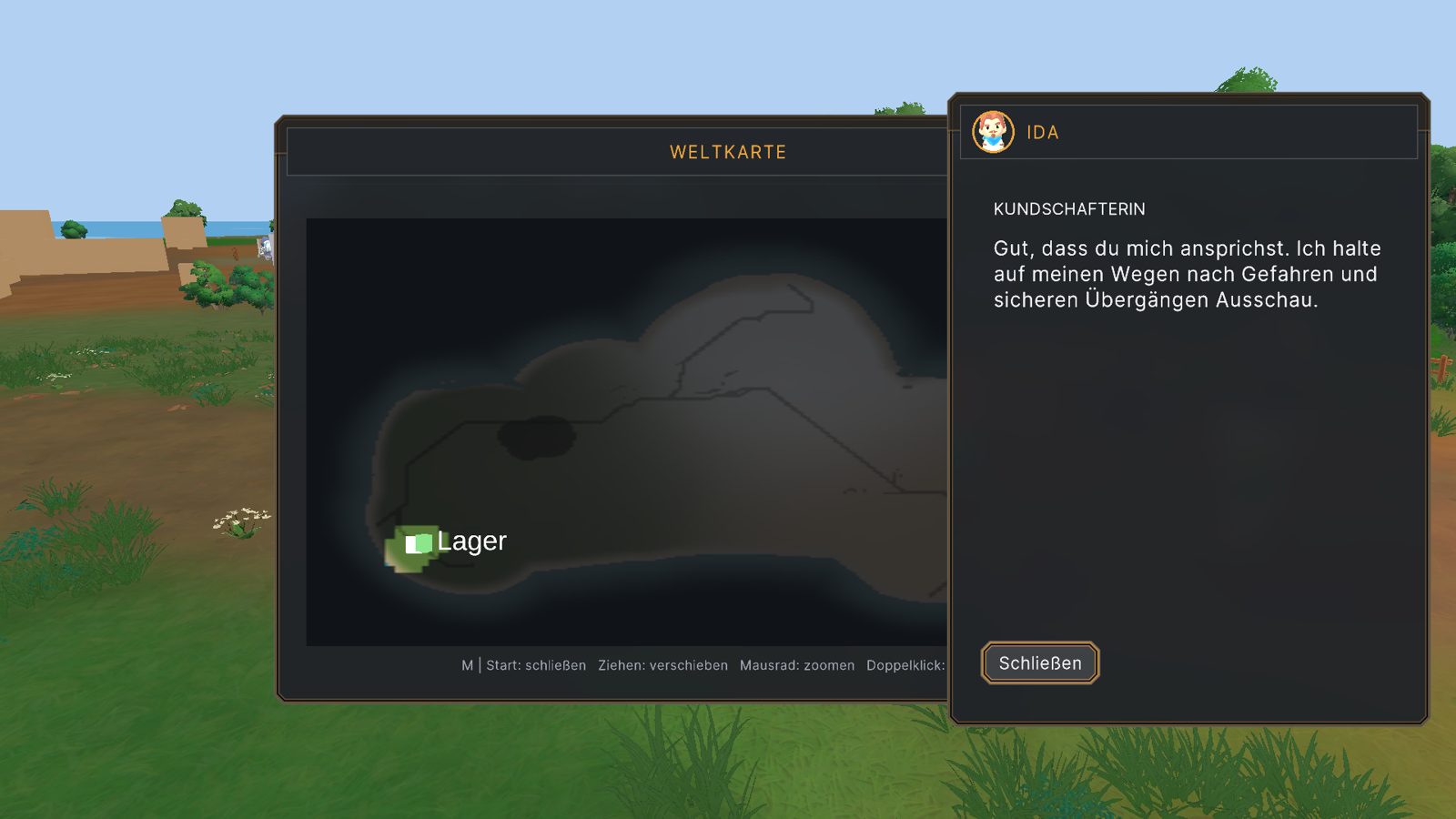
The world map starts covered in fog. The rough shape of the coast and the dark outline of the scar are faintly visible from the start; names, markers and dangers become yours as you explore. The current journal combines Map, Quests and Knowledge (Q); M opens its map tab. A compass provides ongoing navigation; there is no minimap. Discovery and marker work has focused checks, while current readability and player input remain open. See Map and Journal.
Travel
There is no fast travel. The journey is part of the game. In the beta you travel on foot; riding horses, pack animals, carts and boats are planned for later updates. Paths, fords, bridges and gates are part of the world's logic for exactly that reason.